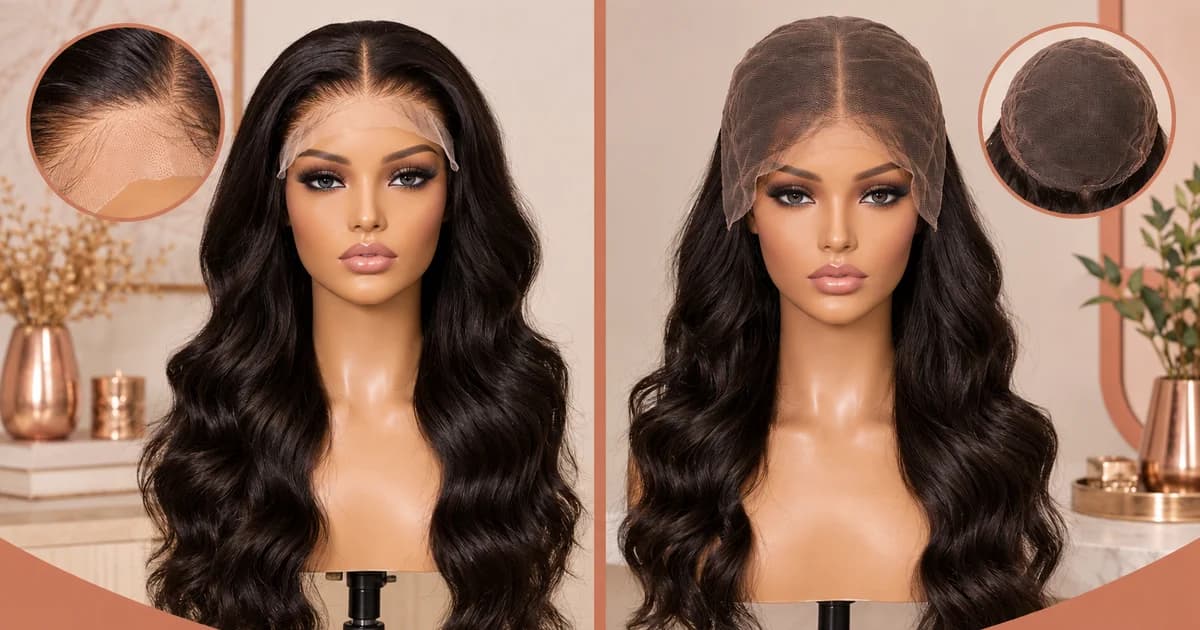

If you're reading this, you may be facing hair loss — or caring for someone who is. We want to start by saying something important: you are not alone. Hair loss affects an estimated 80 million people in the United States alone, from alopecia and chemotherapy to hormonal changes and everyday stress.
And while hair doesn't define your worth, we understand it can feel deeply personal. Choosing a wig during a difficult time shouldn't add more stress. This guide is written to help you navigate the process with clarity, gentleness, and practical information.
Understanding Types of Hair Loss
Different causes of hair loss have different implications for wig selection. Understanding your specific situation helps you choose the right wig.
Chemotherapy-Related Hair Loss
Chemotherapy drugs attack rapidly dividing cells — including hair follicles. The result is often significant or complete hair loss, typically beginning 2–4 weeks after treatment starts.
What to know:
- Hair loss is usually temporary — regrowth typically begins 3–6 months after treatment ends
- Your scalp may become sensitive, tender, or more temperature-sensitive
- Your head size may change during treatment (weight fluctuation)
- Many people experience hair coming back with a different texture or color initially
Wig implications:
- Comfort is priority #1 — soft caps, no irritating seams
- Adjustable sizing is essential (your head may change)
- Consider getting your wig BEFORE treatment starts, while you still have hair for color and style matching
- A lightweight wig reduces pressure on a sensitive scalp
Alopecia
Alopecia is an autoimmune condition with several forms:
| Type | What It Looks Like | Typical Pattern |
|---|---|---|
| Alopecia areata | Coin-shaped bald patches | Random, often on the scalp |
| Alopecia totalis | Complete scalp hair loss | All hair on the head |
| Alopecia universalis | Total body hair loss | Scalp, eyebrows, eyelashes, body |
| Traction alopecia | Thinning at the hairline or temples | Where hair was pulled tight |
Wig implications:
- For patchy alopecia: A wig, topper, or integration piece can cover affected areas while blending with existing hair
- For totalis/universalis: A full wig is the most practical solution
- Alopecia can be unpredictable — adjustable caps accommodate changes
- Traction alopecia often improves when the pulling stops, but a wig can help during recovery
Hormonal and Medical Causes
- Thyroid conditions (hypo/hyperthyroidism) — Can cause diffuse thinning
- Menopause — Estrogen decline can thin hair significantly
- Polycystic ovary syndrome (PCOS) — Can cause androgenetic thinning
- Iron deficiency anemia — Causes diffuse shedding
- Medications — Blood thinners, blood pressure meds, antidepressants can cause thinning
Wig implications: These conditions often cause thinning rather than complete loss. A topper or partial wig may be sufficient; a full wig may feel like overkill until the thinning progresses.
Stress-Related Hair Loss (Telogen Effluvium)
Severe stress — physical or emotional — can push a large number of hair follicles into the resting phase simultaneously. The result is noticeable shedding 2–3 months after the stressful event.
The good news: Telogen effluvium is almost always temporary. Hair regrows once the stress resolves. A wig can be a bridge during the recovery period.
Trichotillomania
Trichotillomania is a hair-pulling disorder where the urge to pull out hair is difficult to control. It can result in noticeable thinning or bald patches.
Wig implications: A wig can serve a dual purpose — covering the affected area AND reducing the urge to pull by creating a physical barrier between fingers and hair.
Choosing a Wig for Medical Hair Loss
When hair loss is medical, your priorities are different from someone buying a wig for fashion. Here's what matters most.
Priority 1: Comfort
Your scalp may be sensitive, especially during chemotherapy or with alopecia. Comfort features to look for:
| Feature | Why It Matters |
|---|---|
| Soft cap lining | Prevents irritation on sensitive or bare scalp |
| Bamboo or cotton inner cap | More breathable and gentler than synthetic linings |
| Monofilament top | Hand-tied single-layer mesh is the gentlest on the crown |
| No irritating seams | Seams pressing on bare scalp can cause discomfort or headaches |
| Lightweight construction | Heavy wigs cause pressure and fatigue |
| Adjustable straps | Your head size may change; adjustable sizing accommodates fluctuation |
Priority 2: Natural Appearance
Looking "natural" means something specific when you're dealing with hair loss: you want to look like yourself — not like you're wearing a costume.
Tips for a natural look:
- Match your natural color (or go within 2 shades) for the easiest transition. You can go bolder later if you want.
- Choose a similar style to what you had before. A dramatic style change on top of hair loss can feel disorienting.
- Lace front is worth the investment — the natural hairline makes a bigger visual difference than any other single feature.
- Consider a slightly shorter style than your natural hair. Shorter wigs are easier to manage, lighter, and often look more natural.
Priority 3: Fit and Security
With less (or no) natural hair to grip, wig security requires more attention:
- Wig grips — Velvet headband-style grips that go under the wig. No adhesive needed.
- Wig tape — Double-sided tape for the hairline. Holds securely, comes off cleanly.
- Wig adhesive — Liquid or spray adhesive for the strongest hold. Best for active lifestyles.
- Adjustable straps — Built into most quality wigs. Tighten as needed.
- Wig caps — A comfortable wig cap under the wig prevents slipping and adds a barrier between the wig and your scalp.
Priority 4: Budget
Medical wigs range widely in price, and budget is a real concern when you're already dealing with treatment costs:
| Budget | What You Can Get | Notes |
|---|---|---|
| Under $50 | Basic synthetic, classic cap | Functional but may look less natural |
| $50–$150 | Good synthetic, lace front | Best value for medical use |
| $150–$300 | Premium synthetic or human hair blend | Natural look with comfort features |
| $300–$800 | Human hair, monofilament or full lace | Maximum comfort and natural appearance |
| $800+ | Custom-made medical wig | Tailored to your head measurements |
Our recommendation: A lace front synthetic wig in the $80–$200 range offers the best combination of natural appearance, comfort, and value for medical hair loss. If budget allows, monofilament caps are the most comfortable option for sensitive scalps.
Insurance Coverage for Medical Wigs
Many insurance plans cover medical wigs — but the process requires specific steps.
How to Get Insurance Coverage
Get a prescription. Ask your doctor (oncologist, dermatologist, or primary care) to write a prescription for a "cranial prosthesis" — this is the medical term insurance companies recognize.
Use the right terminology. On all documentation, use "cranial prosthesis" or "hair prosthesis" — not "wig." The medical term makes the difference between coverage and denial.
Check your plan. Call your insurance company and ask:
- "Does my plan cover cranial prostheses?"
- "What is the coverage amount or lifetime maximum?"
- "Do I need pre-authorization?"
- "Which suppliers are in-network?"
Keep receipts. Save all receipts, prescriptions, and correspondence. Some plans reimburse after purchase; others require pre-authorization.
Typical Coverage
- Private insurance: Coverage varies widely. Some plans cover $300–$1,500 per year; others have no coverage. Always check.
- Medicare: Original Medicare generally does NOT cover wigs. Some Medicare Advantage plans may.
- Medicaid: Coverage varies by state. Some states cover medical wigs fully; others don't.
- FSA/HSA: Medical wigs with a doctor's prescription are typically eligible for FSA and HSA reimbursement.
Financial Assistance Programs
If insurance doesn't cover your wig or you're uninsured:
- American Cancer Society — May provide free wigs or financial assistance for cancer patients
- Locks of Love — Provides free hair prostheses for people with medical hair loss
- Wigs for Kids — Free wigs for children with hair loss
- CancerCare — Financial assistance for cancer-related expenses
- Local cancer centers — Many maintain a wig bank or "wig boutique" with donated wigs
When to Start Looking for a Wig
Before Chemotherapy
If you know treatment will cause hair loss, consider shopping for a wig BEFORE your first session:
- Color matching is easier when you still have your natural hair
- Style selection is less emotional when you're not yet dealing with loss
- Breaking in the wig before you need it reduces the adjustment period
- Emotional preparation — having the wig ready can reduce anxiety about the change
During Hair Loss
If you're already experiencing loss:
- Don't rush. Take your time. This is a decision you'll live with daily.
- Preview privately. Use virtual try-on to see styles on your face from home, without the emotional stress of a wig shop.
- Start simple. A style close to your natural hair is the easiest first wig.
After Recovery
Even after hair regrows:
- New hair may come in with different texture or color
- Regrowth is often short and uneven for months
- A wig or topper can bridge the gap until your natural hair reaches a length you're comfortable with
How to Preview Wigs Privately
Visiting a wig shop can feel overwhelming — the fluorescent lighting, the mirrors, the salespeople. Many people dealing with hair loss prefer to explore options privately first.
Wigwy lets you:
- Preview 30 styles on your own face — from your phone or computer, in the privacy of your home
- Try different colors — see which shade works with your current skin tone
- Share results — send previews to a friend or family member for a second opinion
- Take your time — no one is watching, no one is selling, no pressure
Your selfie is encrypted and automatically deleted from our servers within 24 hours. It is never used for AI training or shared with anyone.
A Note on Emotional Wellbeing
Hair loss is not just a physical change — it's an emotional one. It can affect your self-image, your confidence, and your sense of identity. These feelings are valid, and they're shared by millions of people.
Some things that may help:
- Talk about it. Whether with a therapist, a support group, a friend, or an online community, sharing your experience can lighten the emotional weight.
- Take it one step at a time. You don't need to figure everything out today.
- Remember: a wig is a tool. It's there to help you feel like yourself. There's no right or wrong way to wear it, or not wear it.
- Give yourself permission to experiment. Hair loss can be an unexpected opportunity to try styles and colors you never would have tried before. Some people discover a look they love even more than their natural hair.
Hair doesn't define you. But if a wig helps you feel like yourself again, that's a beautiful and valid choice.
Frequently Asked Questions
Will people be able to tell I'm wearing a wig?
With a properly fitted lace front wig in a natural color, most people cannot tell. The key factors are a natural hairline, appropriate color for your skin tone, and a style that suits your face. Modern wigs are remarkably natural-looking.
How do I care for my wig during chemotherapy?
Wash gently every 6–10 wears with wig-specific products. Store on a wig stand. Handle the lace carefully. If your scalp is sensitive, wear a soft cotton or bamboo wig cap underneath. See our complete wig care guide for detailed instructions.
Can I wear a wig during chemotherapy treatment sessions?
Yes. Many people wear their wig to treatment sessions. If the wig feels uncomfortable during treatment (some people experience scalp sensitivity), bring a soft hat or scarf as a backup.
Is it worth buying an expensive wig for medical hair loss?
If you expect to wear the wig daily for 6–12 months or more, investing in a quality wig ($100–$300) makes sense — it will be more comfortable, look more natural, and last longer. If you need a wig for a shorter period, a mid-range synthetic ($50–$150) is a practical choice.
When will my hair grow back after chemotherapy?
Regrowth typically begins 3–6 months after treatment ends. It may take 12–18 months to reach a length most people are comfortable with. The new hair may initially be different in texture or color — this is normal and usually resolves over time.
Can I exercise or swim in a wig?
You can exercise in a wig with proper securing (wig grip + adjustable straps). Swimming is harder — chlorine and salt water damage wig fibers. Consider a designated swim cap or a "swim wig" that you don't mind getting damaged. Always rinse the wig with cool fresh water immediately after pool or ocean exposure.