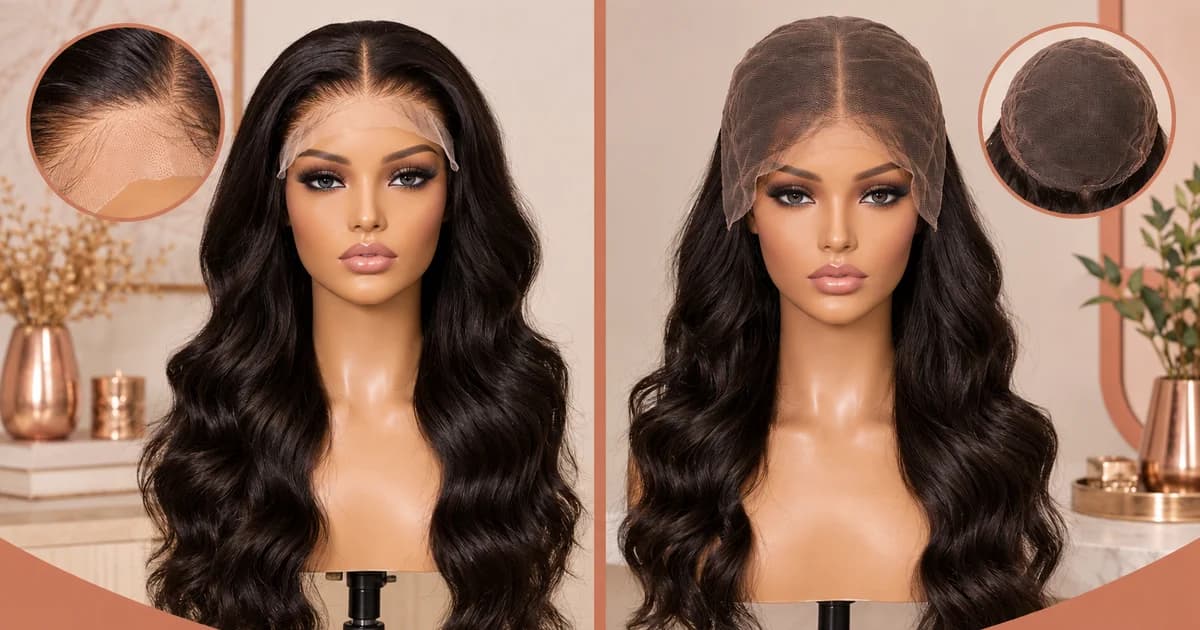
Buying your first wig can feel overwhelming. There are dozens of fiber types, cap constructions, sizing options, and price points — and every website seems to use different terminology.
This guide cuts through the confusion. Whether you're exploring wigs for fashion, convenience, a medical need, or just curiosity, we'll cover everything from "what kind of wig should I get?" to "how do I take care of it?" — in plain language.
The Two Big Decisions: Fiber and Cap
Every wig purchase comes down to two fundamental choices: what the hair is made of (fiber) and how the cap is constructed. Everything else — style, color, length — builds on top of these.
Human Hair vs Synthetic: A Complete Comparison
Human Hair Wigs
Human hair wigs are made from real human hair that has been collected, processed, and sewn or tied into a cap.
Types of human hair:
| Type | Description | Price Level |
|---|---|---|
| Virgin | Unprocessed, never chemically treated. All cuticles intact and aligned. | $$$$$ |
| Remy | Cuticles intact and aligned in one direction. May have been lightly processed. | $$$$ |
| Non-Remy | Cuticles may be stripped. Hair is coated with silicone for smoothness. | $$$ |
| Blended | Mix of human hair and synthetic fiber. Compromise between quality and price. | $$ |
Pros of human hair:
- Looks and feels the most natural
- Can be heat-styled with flat irons, curling irons, and blow dryers
- Can be professionally colored or highlighted
- Moves naturally in wind and during activity
- Lasts 1–3 years with proper care
Cons of human hair:
- Significantly more expensive ($100–$2,000+)
- Requires regular styling (doesn't hold a set like synthetic)
- Affected by humidity and weather (just like natural hair)
- Needs conditioning, deep treatments, and careful washing
- Color can fade with sun exposure
Synthetic Wigs
Synthetic wigs are made from manufactured fibers designed to mimic human hair. Modern high-quality synthetics can look remarkably realistic.
Types of synthetic fiber:
| Type | Description | Heat Safe? |
|---|---|---|
| Standard synthetic | Basic plastic fiber. Affordable, pre-styled. | No — melts with heat |
| Heat-friendly synthetic | Advanced fiber that can tolerate low heat (up to 350°F). | Yes — with caution |
| Premium synthetic | High-end fiber with natural movement and sheen. | Varies by brand |
Pros of synthetic:
- Much more affordable ($20–$200)
- Pre-styled — the style "bounces back" after washing
- Low maintenance — no daily styling needed
- Not affected by humidity
- Wide variety of colors, including fashion shades
Cons of synthetic:
- Can look less natural (especially in cheap versions)
- Can't be heat-styled (unless heat-friendly)
- Can't be permanently colored
- Shorter lifespan — 3–6 months with regular wear
- Shine can look artificial (though this has improved dramatically)
Our Recommendation for First-Time Buyers
Start with a mid-range synthetic wig ($50–$150). Here's why:
- You can afford to experiment with different styles without a huge investment
- You'll learn what style, length, and color you prefer
- You'll understand how to care for a wig before investing in human hair
- Modern synthetics look dramatically better than they did 5 years ago
- Once you know your preferences, you can invest in a human hair wig with confidence
Cap Construction: Understanding the Options
The cap is the base of the wig — the structure that sits on your head and holds the hair in place.
Basic/Classic Cap
The most affordable option. Hair wefts are machine-sewn onto a stretchy cap.
- Pros: Affordable, durable, easy to find
- Cons: Less natural at the part, less breathable, can look wiggy
- Best for: Budget-conscious buyers who want to experiment with styles
- Price impact: Lowest
Lace Front Cap
A sheer lace panel along the front hairline (ear to ear), with wefts elsewhere.
- Pros: Natural-looking hairline, can be parted at the front, more breathable at the hairline
- Cons: More expensive than basic caps, lace requires careful handling
- Best for: Anyone who wants a natural front hairline — the most popular choice
- Price impact: Moderate
For a deep dive on lace options, read our lace front vs full lace comparison.
Full Lace Cap
The entire cap is made of lace, with every hair strand hand-tied individually.
- Pros: Part anywhere, wear updos and ponytails, most natural appearance, most breathable
- Cons: Expensive, delicate, requires careful maintenance
- Best for: Experienced wig wearers who want maximum versatility
- Price impact: Highest
Monofilament Cap
A fine, single-layer mesh at the crown where each hair is hand-tied. Creates the most natural-looking part.
- Pros: Extremely natural part appearance, comfortable, breathable at the top
- Cons: Expensive, usually combined with wefts elsewhere
- Best for: Anyone who wants a flawless part without full lace
360 Lace Cap
Lace around the entire perimeter (front, sides, nape) with wefts or other material on top.
- Pros: Natural hairline all around, can do low ponytails
- Cons: Not as versatile as full lace for high updos
- Best for: A middle ground between lace front and full lace
How to Measure Your Head for a Wig
Most wigs come in standard sizes, but knowing your measurements helps you choose between Average, Petite, and Large.
What You Need
- A soft, flexible measuring tape
- A mirror
- A pen and paper
The Four Key Measurements
Circumference: Wrap the tape around your head — above the ears, across the forehead (at the hairline), and around the back at the widest point. This is the most important measurement.
Front to nape: From your front hairline straight over the top of your head to the nape of your neck.
Ear to ear across the forehead: From the top of one ear, across your forehead at the hairline, to the top of the other ear.
Ear to ear over the top: From the top of one ear, straight over the crown, to the top of the other ear.
Standard Wig Sizes
| Size | Circumference | Best For |
|---|---|---|
| Petite | 20.5"–21.5" | Smaller heads, teens |
| Average | 21.5"–22.5" | Most adults (80%+ of buyers) |
| Large | 22.5"–23.5" | Larger heads |
Most first-time buyers fit an Average size. If you're between sizes, adjustable straps on the cap can accommodate 0.5"–1" of difference.
Choosing Your First Style
With so many options, here's a framework for narrowing down your first wig:
Start With What You Know
If you have a hairstyle you like, choose something similar. A wig that looks like "you but better" is easier to wear confidently than a dramatic transformation.
Consider Your Face Shape
Different styles flatter different face shapes:
- Round face — Long layers, side parts, styles that fall below the chin. See our round face guide.
- Oval face — Most styles work. Lucky you.
- Square face — Soft waves, layers, and off-center parts soften angular features.
- Heart face — Chin-length or longer styles that add width at the jaw.
- Long face — Styles with volume at the sides, bangs, and chin-length bobs.
Preview Before You Buy
The single best advice for a first-time buyer: see the style on your own face before spending money.
With Wigwy, you can upload a selfie and preview 60+ styles in 30 colors. It takes about 20 seconds per preview, and your first try is free.
Color Matching Basics
For your first wig, we recommend staying within 2–3 shades of your natural color. This creates a natural transition that's easier to wear with confidence.
For a deep dive into color selection, read our full guide on choosing wig color for your skin tone.
Quick Rules
- Warm skin tone → Warm colors (honey, caramel, auburn, golden)
- Cool skin tone → Cool colors (ash, platinum, burgundy, espresso)
- Neutral skin tone → You can go either direction
- First wig? → Stay close to your natural shade to start
Basic Wig Care for Beginners
You've bought your first wig. Now how do you take care of it?
Washing
- Frequency: Every 6–10 wears, or when product builds up
- Temperature: Cool to lukewarm water — never hot
- Products: Wig-specific shampoo and conditioner only — regular products are too harsh
- Technique: Gently swish through water. Never rub, twist, or wring
Drying
- Air dry on a wig stand — never in a dryer
- Blot with a towel gently — never rub
- Keep away from direct heat sources
Storage
- Daily: Wig stand or mannequin head
- Long term: Silk or satin bag in a cool, dry place
- Never: Plastic bags (trap moisture → mold)
Styling
- Synthetic: Don't use heat unless the wig is specifically heat-friendly. Use wig-specific products.
- Human hair: Can use low-heat tools (under 350°F) with heat protectant.
For a complete guide, see our wig care article.
How Much Should You Spend?
Budget Ranges for First-Time Buyers
| Budget | What You Get | Our Advice |
|---|---|---|
| Under $50 | Basic synthetic, classic cap | Fine for experimenting, but manage expectations |
| $50–$150 | Good synthetic, lace front cap | Best starting point for most buyers |
| $150–$300 | Premium synthetic or entry-level human hair | Great if you've previewed and know what you want |
| $300+ | Quality human hair, full lace or monofilament | Wait until you know your preferences |
Our honest advice: Don't spend $500 on your first wig. Spend $50–$150 on a lace front synthetic, learn what you like, then invest more once you're confident in your preferences.
Frequently Asked Questions
What type of wig is best for a beginner?
A lace front synthetic wig in the $50–$150 range. It gives you a natural hairline, requires minimal maintenance, comes pre-styled, and is affordable enough to experiment with.
How do I know what wig style will look good on me?
Use virtual try-on to preview styles on your own face. Try at least 5 different styles to understand what flatters your face shape and features. It's faster, cheaper, and less stressful than buying and returning physical wigs.
Can other people tell I'm wearing a wig?
With a properly fitted lace front or full lace wig, most people cannot tell. The key factors are: a natural-looking hairline, proper color matching to your skin tone, and a style that suits your face shape. Cheap wigs with obvious shine and unnatural parts are easier to spot.
How long does a wig last?
Synthetic: 3–6 months of regular wear. Human hair: 1–3 years with proper care. Both last longer if you rotate between multiple wigs and follow proper care routines.
Do wigs damage your natural hair?
Not if you wear them correctly. Use a wig cap to protect your natural hair, don't make your braids or cornrows too tight underneath, and give your scalp regular breaks from wearing a wig.
Where should I buy my first wig?
For your first wig, buy from a seller with a good return policy. Online wig retailers (like Luvme, Celie, or UNice) offer wide selections and reviews. Local wig shops let you try before you buy. Whichever route you choose, preview the style on your face first to narrow your options.