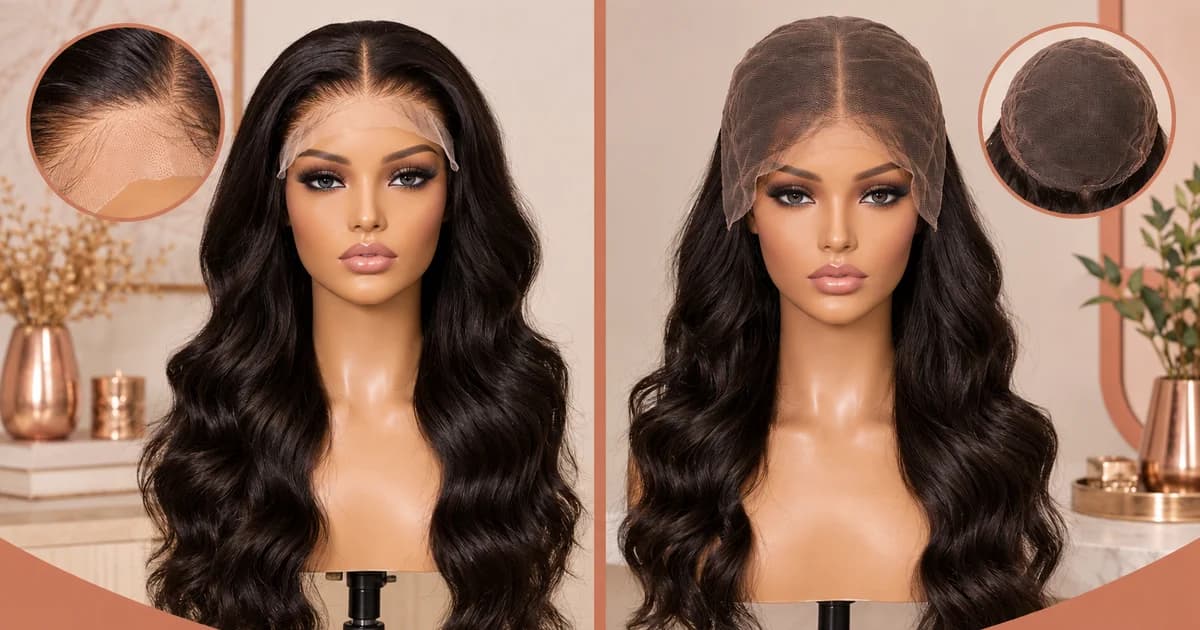
"Should I get a lace front or a full lace wig?" is one of the most common questions in the wig world — and one of the most confusing, because the answer depends entirely on how you plan to wear it.
Both types look natural. Both use lace material. But they differ significantly in construction, versatility, comfort, durability, and price. This guide breaks down every difference so you can make an informed decision.
What Is a Lace Front Wig?
A lace front wig has a sheer lace panel along the front hairline only — typically running from ear to ear, about 1–3 inches deep. The rest of the cap is made of a more durable material (usually machine-sewn wefts, stretch mesh, or a combination).
How the Lace Works
The lace is a fine, nearly invisible mesh. Individual hair strands are hand-tied to this mesh, creating a natural-looking hairline when the wig is applied. When properly blended (with adhesive, wig tape, or just laying flat), the lace disappears against your skin, making it look like the hair is growing from your scalp.
What You Can Do With a Lace Front
- Part the hair at the front (left, right, or center)
- Style the front hairline to look natural
- Pull hair back slightly from the face
- Create a natural-looking baby hair effect
What You Can't Do
- Style in a high ponytail or bun (the back cap would show)
- Part the hair along the sides or back
- Fully pull the hair away from your face
What Is a Full Lace Wig?
A full lace wig has a lace cap that covers your entire head. Every single hair strand is individually hand-tied to the lace cap — there are no machine-sewn wefts.
How It's Different
Because the entire cap is lace, you can part the hair anywhere on the head and style it in any direction. The wig looks natural from every angle, including the sides, back, and crown.
What You Can Do With Full Lace
- Part anywhere — center, side, zig-zag, diagonal
- Wear in high ponytails, buns, half-up styles, and updos
- Pull hair away from the face completely
- Style behind the ears
- Create any updo or braided style
- Achieve 360° natural appearance
Side-by-Side Comparison
| Feature | Lace Front | Full Lace |
|---|---|---|
| Lace coverage | Front hairline only (1-3") | Entire cap |
| Hair attachment | Hand-tied at front, machine wefts elsewhere | 100% hand-tied throughout |
| Parting versatility | Front only | Anywhere on the head |
| Updo capability | Limited | Full — ponytails, buns, braids |
| Natural appearance | Natural at the front | Natural from every angle |
| Breathability | Good at front, average elsewhere | Excellent throughout |
| Weight | Average | Lighter (no wefts) |
| Durability | Higher — wefts are more durable | Lower — all-lace is more delicate |
| Construction time | Moderate | Extensive (all hand-tied) |
| Price range | $50–$300 | $200–$1,000+ |
| Installation | Easier, faster | More involved |
| Maintenance | Standard | More careful handling needed |
| Best for | Everyday wear, down styles | Versatile styling, updos |
When to Choose a Lace Front
A lace front wig is the right choice if:
You Wear Your Hair Down Most of the Time
If your go-to style is hair flowing freely, a lace front gives you a natural hairline where it matters — at the front — without the extra cost of lace you'll never see.
You're New to Wigs
Lace fronts are easier to apply, maintain, and handle. They're more forgiving of beginner mistakes. If you're still learning how to care for wigs, start here.
Budget Is a Factor
A high-quality lace front costs $100–$200. A comparable full lace wig costs $300–$800. If you're not sure you need updo versatility, the price difference buys you 2–3 lace front wigs instead.
You Want Durability
The machine-sewn wefts in the back of a lace front wig are more durable than hand-tied lace. They can withstand more handling, more washes, and more daily wear.
Quick Daily Wear
Lace fronts are faster to put on and take off. If you're wearing a wig daily and want to minimize your routine, lace front is the practical choice.
When to Choose a Full Lace
A full lace wig is the right choice if:
You Love Updos, Ponytails, and Braids
This is the #1 reason people choose full lace. If you want to wear high ponytails, sleek buns, half-up styles, or braided updos, you need lace coverage on the entire cap.
You Want Maximum Styling Flexibility
With full lace, you can change your part daily, try different styles, and experiment freely. The wig looks natural no matter how you style it.
Natural Appearance Is Your Top Priority
If people will see the back and sides of your wig (e.g., short styles, styles with exposed nape), full lace ensures natural appearance from every angle.
Comfort and Breathability Matter
Full lace caps are lighter and more breathable than caps with wefts. If you live in a hot climate or wear your wig for long hours, you'll feel the difference.
You Have a Sensitive Scalp
For medical hair loss or sensitive scalps, full lace caps provide a gentler, more even contact surface than wefts. Read our guide on wigs for hair loss for more on comfort considerations.
HD Lace vs Regular Lace
Within both categories, you'll encounter different lace types:
Regular Lace
- Thicker, more visible mesh
- Requires more blending work (adhesive, concealer)
- More durable
- Less expensive
HD (High Definition) Lace
- Ultra-thin, nearly invisible mesh
- Melts into skin with minimal blending
- More delicate — tears more easily
- More expensive
- Best for a truly undetectable hairline
Swiss Lace
- Middle ground between regular and HD
- Good balance of durability and invisibility
- Most popular option for daily wear
Cost Breakdown: What You're Paying For
Lace Front Pricing
| Quality Tier | Price Range | What You Get |
|---|---|---|
| Budget | $30–$80 | Synthetic hair, basic cap, regular lace |
| Mid-range | $80–$200 | Human hair blend or 100% human hair, decent lace |
| High-end | $200–$400 | Virgin human hair, HD lace, pre-plucked hairline |
Full Lace Pricing
| Quality Tier | Price Range | What You Get |
|---|---|---|
| Budget | $100–$250 | Synthetic or human hair blend, basic full lace |
| Mid-range | $250–$500 | 100% human hair, good lace quality |
| High-end | $500–$1,000+ | Virgin hair, HD lace, custom cap size |
The price difference comes primarily from the labor: hand-tying every single hair strand to a full lace cap takes significantly longer than machine-sewing wefts.
Maintenance Differences
Lace Front Care
- Wash every 7–10 wears
- Can use standard wig care products
- Store on a wig stand or mannequin head
- Replace lace adhesive as needed
- Expected lifespan: 6–12 months (human hair), 3–6 months (synthetic)
Full Lace Care
- Wash every 7–10 wears with extra care
- Use gentle, wig-specific products only
- NEVER wring or twist — the lace cap is delicate
- Store on a mannequin head (not folded)
- Handle the lace edges with clean, dry fingers
- Expected lifespan: 8–18 months with careful handling
For detailed care instructions, see our complete wig care guide.
How to Decide: A Decision Framework
Answer these three questions:
Question 1: Will You Wear Updos?
- Regularly → Full lace
- Occasionally → Full lace (it's worth the investment)
- Never → Lace front
Question 2: What's Your Budget?
- Under $200 → Lace front
- $200–$500 → Either, depending on quality preferences
- $500+ → Full lace (you're getting quality at this price)
Question 3: How Comfortable Are You With Wig Care?
- Beginner → Start with lace front
- Experienced → Either — you know how to handle delicate lace
- Minimal maintenance preferred → Lace front
Preview Both Styles on Your Face
Not sure which look you prefer? The best way to decide is to see both options on your own face before investing.
Try Wigwy free → — Upload a selfie and preview any style in our catalog of 60+ styles, including lace front favorites like body waves and full-lace-friendly updos.
Frequently Asked Questions
Can you tell the difference between lace front and full lace?
From the front, a well-applied lace front and full lace look identical. The difference only shows when you style the hair back, up, or in a ponytail — where the lace front's weft cap becomes visible.
Is a 360 lace wig the same as full lace?
No. A 360 lace wig has lace around the entire perimeter (front, sides, and nape) but uses wefts or other materials on the top and crown. It offers more versatility than a lace front (you can do low ponytails) but less than full lace (high ponytails may still show the cap).
How long does a lace front wig last?
With proper care: 6–12 months for human hair, 3–6 months for synthetic. Full lace wigs can last 8–18 months with careful handling, though the lace itself is more delicate.
Can you sleep in a lace front wig?
It's not recommended. Sleeping in any wig causes friction, tangling, and faster deterioration. If you must, use a satin/silk pillowcase and tie the hair loosely. But removing the wig at night is always better for both the wig and your scalp.
Which is better for beginners?
Lace front. It's more affordable, easier to apply, more durable, and requires less careful handling. Start with a lace front to learn your preferences, then upgrade to full lace if you find you need more styling versatility.